
News


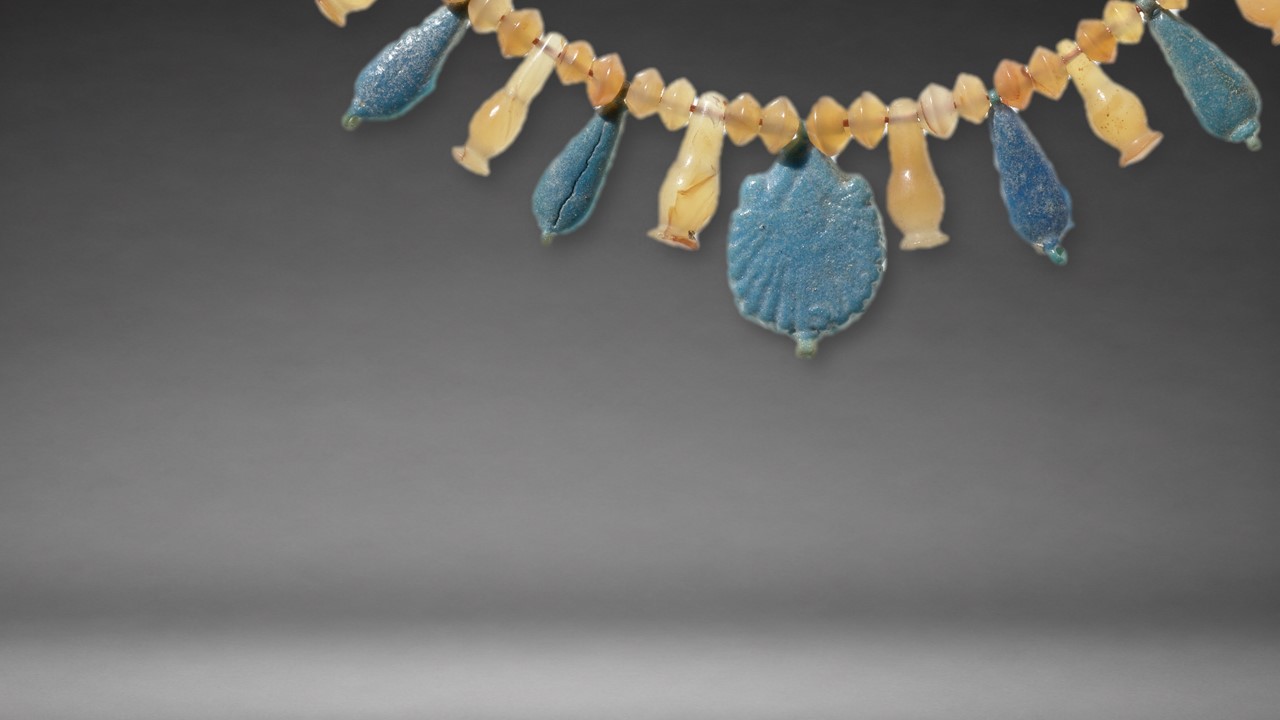
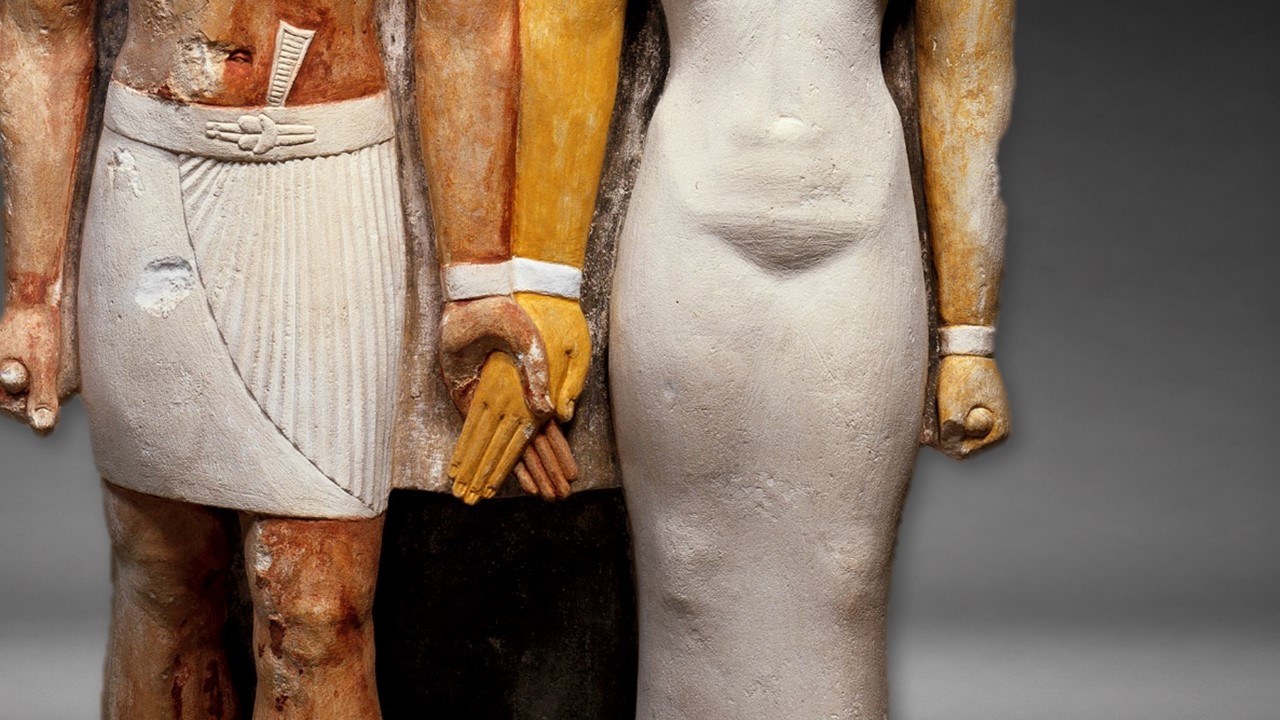
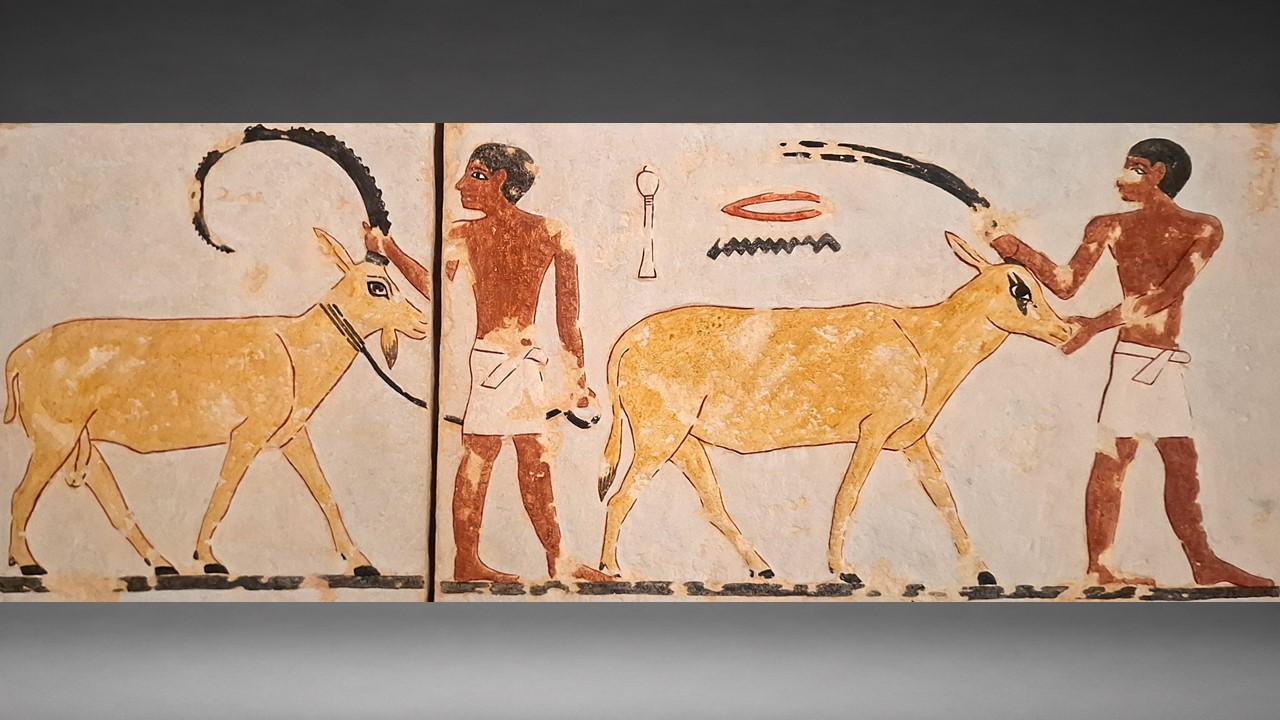
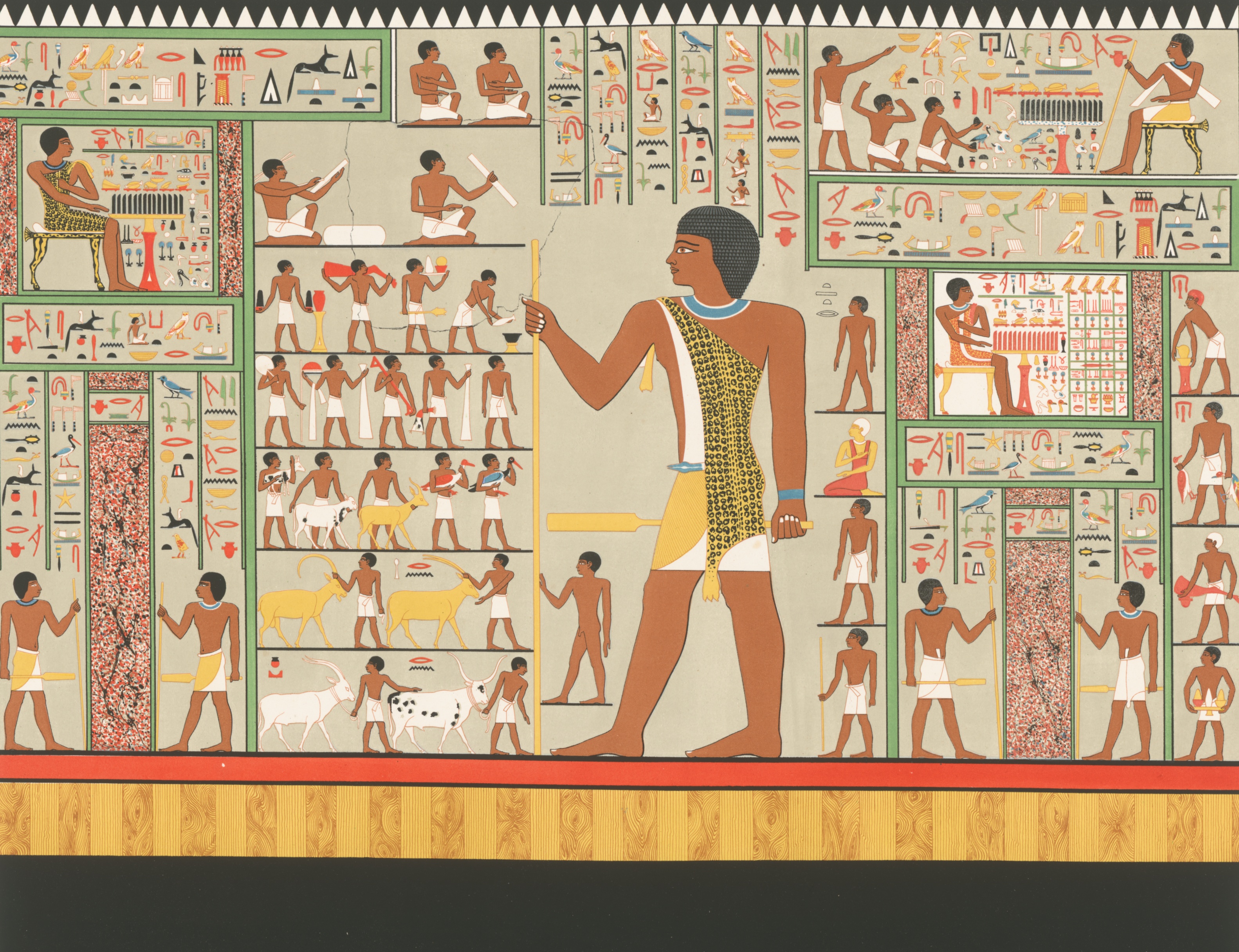
Figure showing paintings from the offering chapel of the mastaba belonging to Merib (G-2100-I), from K. R. Lepsius’s publication Denkmäler aus Aegypten und Aethiopien, published in 1849, from the collections of the Dokumentenarchiv des Ägyptischen Museums und Papyrussammlung Berlin (Lepsius 1849: Pl. 20).
The exhibition also presents a reconstruction of the offering chapel from the mastaba of
Merib at Giza. This tomb was part of a larger funerary complex consisting of three mastabas (G2100, G2100-I, and G2100-II) located in the Western Cemetery, near the Great Pyramid of Khufu. The complex belonged to Merib and members of his family, most likely his mother Sedit and daughter Nensedjerkai. Merib was a high-ranking official who lived during the transition between the 4th and 5th Dynasties, and the many titles he held reflect his prominent position at the royal court.
Merib’s tomb (G2100-I) was a rectangular structure measuring 22 by 14 metres and standing nearly 5 metres high. It was constructed from massive limestone blocks, with its outer walls sloping inwards at an angle of 70 to 75 degrees. Beneath this superstructure, two burial chambers were cut into the bedrock and accessed via shafts leading down from the roof. Like many mastabas in this part of Giza, the tomb had already been plundered in antiquity. By the time it was discovered, the chambers were almost empty, containing only fragments of funerary equipment and a few small objects.
Architecturally, the mastaba of Merib does not differ significantly from other tombs located within the necropolis; however, it is distinguished by its richly decorated offering chapel. Vibrant reliefs once covered the interior walls, entrance façade, and corridor. Their subject matter is characteristic of the Old Kingdom, focusing on the cult of the deceased and his afterlife. The chapel served as the main point of contact between the living and the dead – the owner of the mastaba. It was here that offerings were made, and the false doors set into the walls were believed to allow contact with the deceased.
The tomb was unearthed during the Prussian Expedition to Egypt and Ethiopia (1842–1845), led by the scholar Karl Richard Lepsius. In December 1842, the team discovered the decorated chapel and later decided to relocate this portion of the mastaba to Berlin. After obtaining permission from the Egyptian authorities in 1845, the chapel was carefully prepared for its journey to Europe.
The reconstructed offering chapel can be admired in the Neues Museum in Berlin. Unfortunately, its original polychromy was almost completely lost within the first years following the discovery. As a result, the reliefs carved into the limestone blocks are now bare and monochrome. Before the chapel was dismantled and transported, detailed drawings and watercolour documentation were made, which remain the only surviving record of its original appearance.
These nineteenth-century sketches and watercolours later served as the basis for the
reconstruction of the chapel carried out in Berlin between 1982 and 1984 using the original stone blocks. While the architectural layout and reliefs could be reconstructed with considerable accuracy, the colour scheme of the scenes remains partly hypothetical. The colours and shades preserved in the surviving documentation may differ from the original due to the conventions of nineteenth-century scholarship and copying practices, as well as technical limitations of the period.
Part of this reconstruction, on loan from the Staatliche Museen zu Berlin, is currently housed at the Archaeological Museum in Poznań. It is undergoing conservation work in preparation for the new permanent exhibition, “The Joy of Life in the Shine of Ra”. By the end of the year, visitors will be able to see a full-scale reconstruction of the northern and western walls of Merib’s chapel, complete with the original reliefs and scenes. The display will recreate part of the chapel’s interior, including an offering table, a statue of the deceased, and two columns.
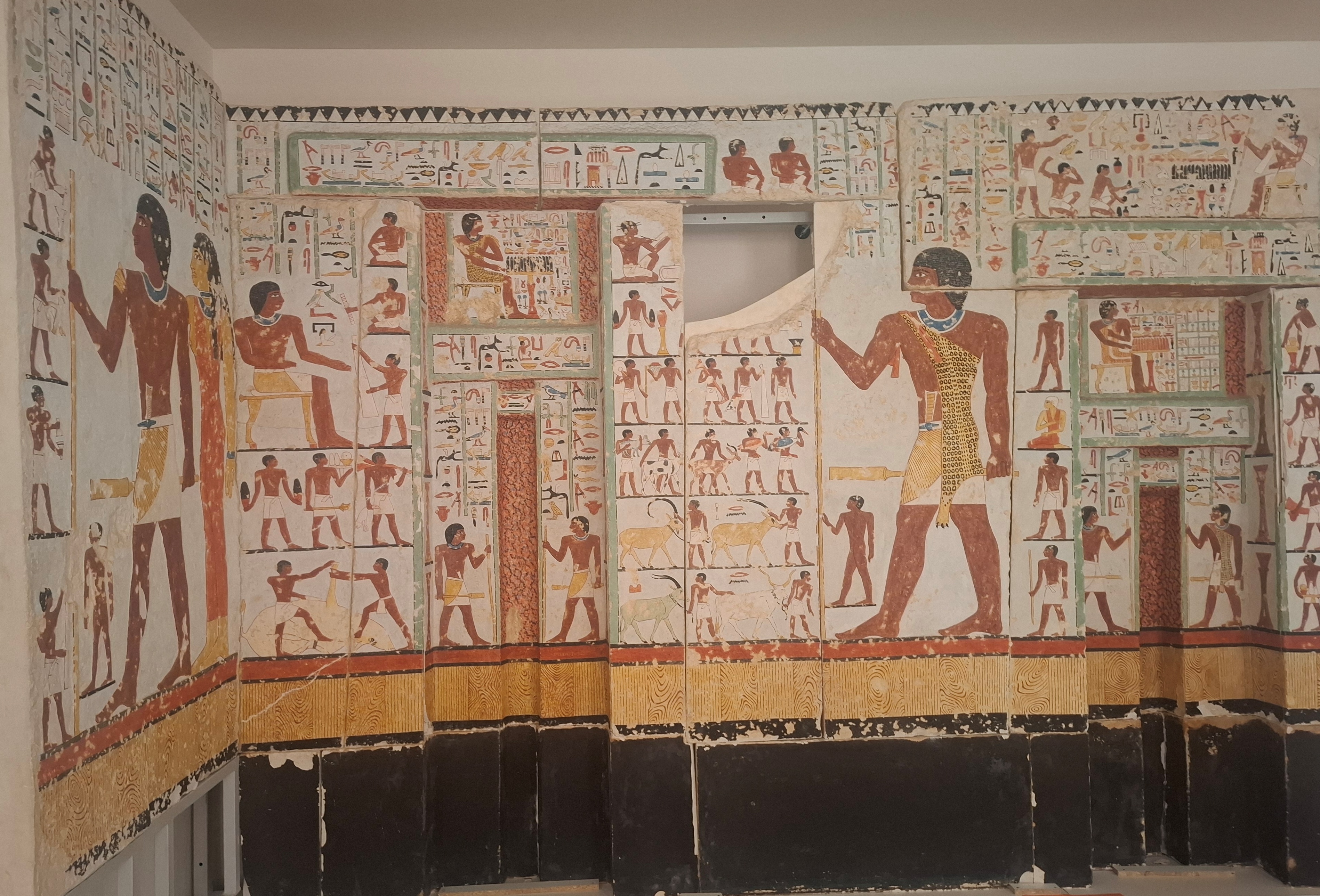
Western and southern walls of the offering chapel from the mastaba of Merib (G 2100-I) after reconstruction in the exhibition galleries of the Archaeological Museum in Poznań (before conservation treatment). Photograph: A. Mączyńska and K. Dolata-Goszcz.